Casa Vihara by Di Frenna Arquitectos, A Tropical Residence Shaped by Water, Light, and the Rhythm of the Landscape
Architecture Design of Casa Vihara
Description About The Project
Casa Vihara by Di Frenna Arquitectos is a tropical residence inspired by mangrove ecosystems, organized around courtyards, water, and vegetation, with layered volumes, rooftop terraces, and climate-responsive design.
The Project “Casa Vihara” Information:
- Project Name: Casa Vihara
- Location: Tankah Pueblo, Quintana Roo, Mexico
- Project Year: 2025
- Area: 634 m2
- Designed by: Di Frenna Arquitectos
Casa Vihara: Architecture as an Extension of Water and Jungle
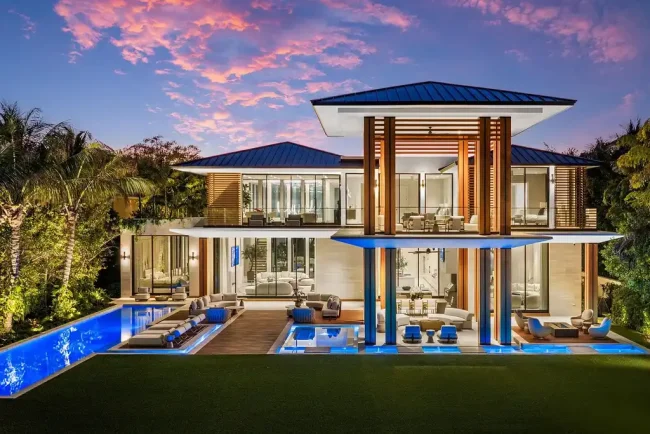
Designed by Di Frenna Arquitectos, Casa Vihara emerges from a deep understanding of landscapes where water, vegetation, and light shape the way life unfolds. Rather than imposing a formal gesture, the project adopts the logic of its environment—drawing inspiration from mangrove ecosystems where land and water coexist in a delicate, interwoven balance.
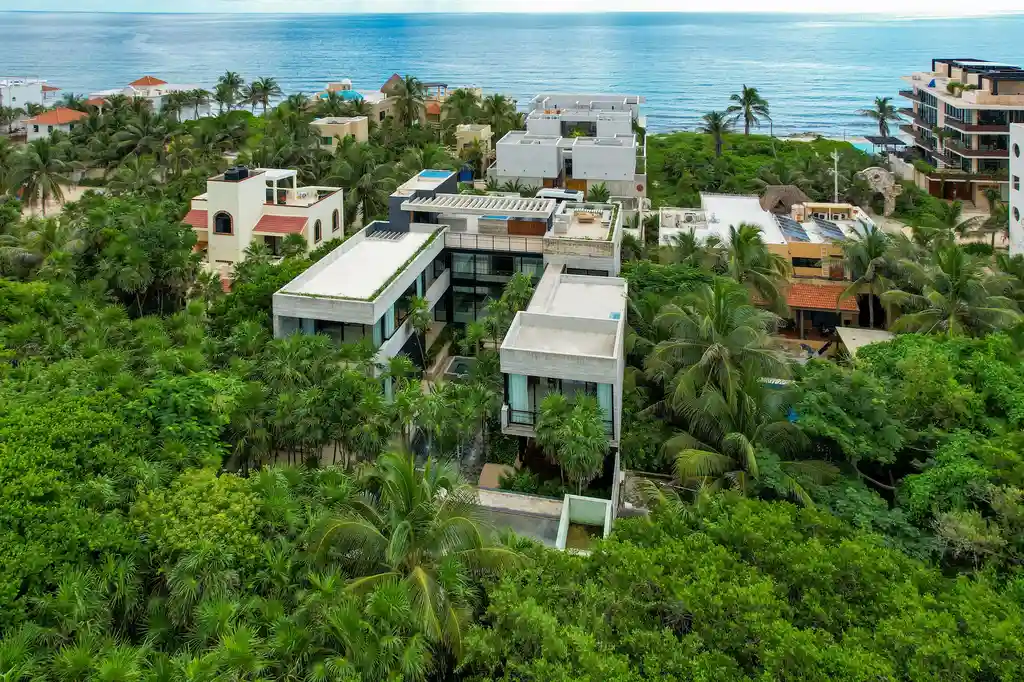
Here, architecture becomes a quiet mediator, learning from the rhythms of nature to define how space opens, shelters, and guides movement.
SEE MORE: Mocoli 1 House by arQ Estudio Redefines Tropical Living in Ecuador, Open-Air Minimalism Refined
A Layered Threshold and Processional Arrival
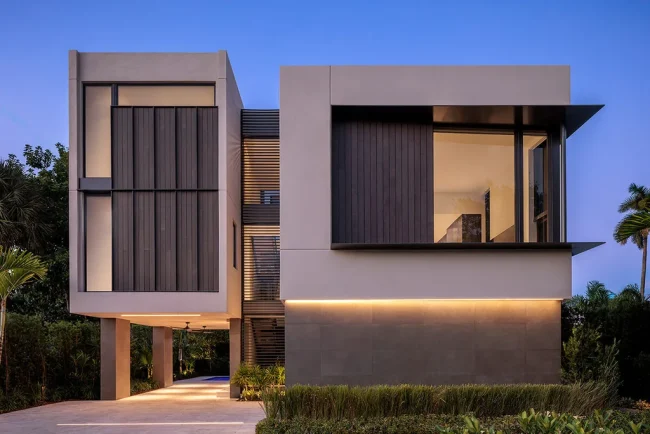
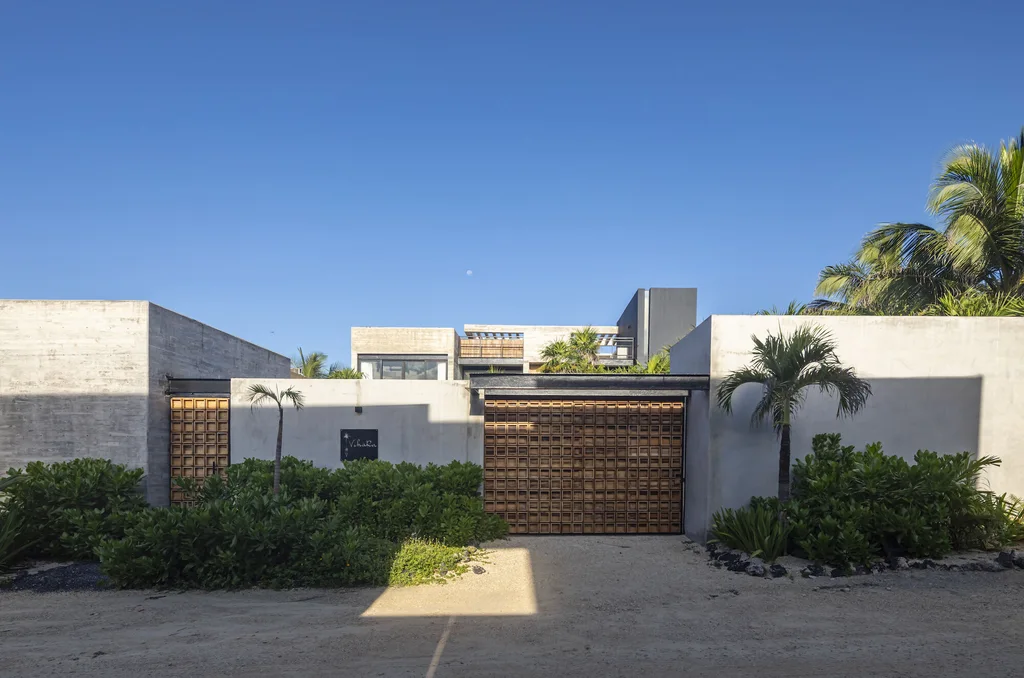
The approach to the house is carefully choreographed. Entry occurs between two volumes that establish an initial layer of privacy, filtering the transition from exterior to interior. Passing through this threshold, visitors arrive at a central courtyard where the main façade is revealed for the first time.
“We conceived the arrival as a gradual unfolding,” the architects explain. “The house does not reveal itself immediately—it invites you to discover it step by step.”
From this point, the architecture opens inward, emphasizing a way of living organized around patios, gardens, and controlled moments of exposure.
SEE MORE: The Black Ember Residence in Baabdat, A Sculpted Mountain Retreat by Akl Architects
A Spatial Journey Across Levels
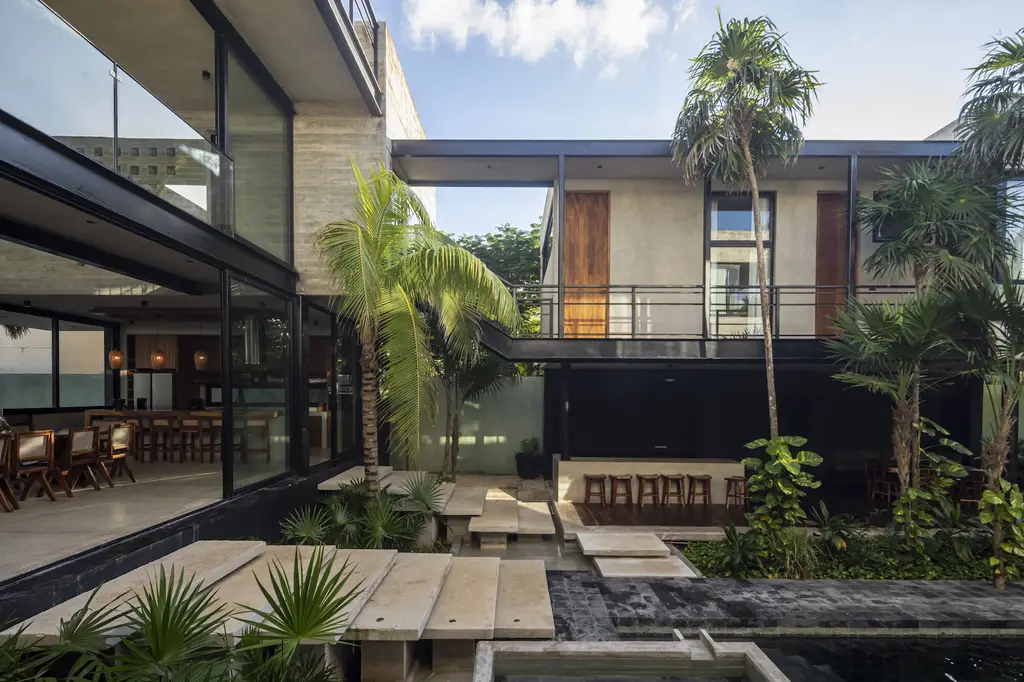
The house unfolds through a sequence of levels connected by exterior stairways. Changes in elevation are not merely functional—they shape the experience of movement, allowing the architecture to reveal itself progressively.
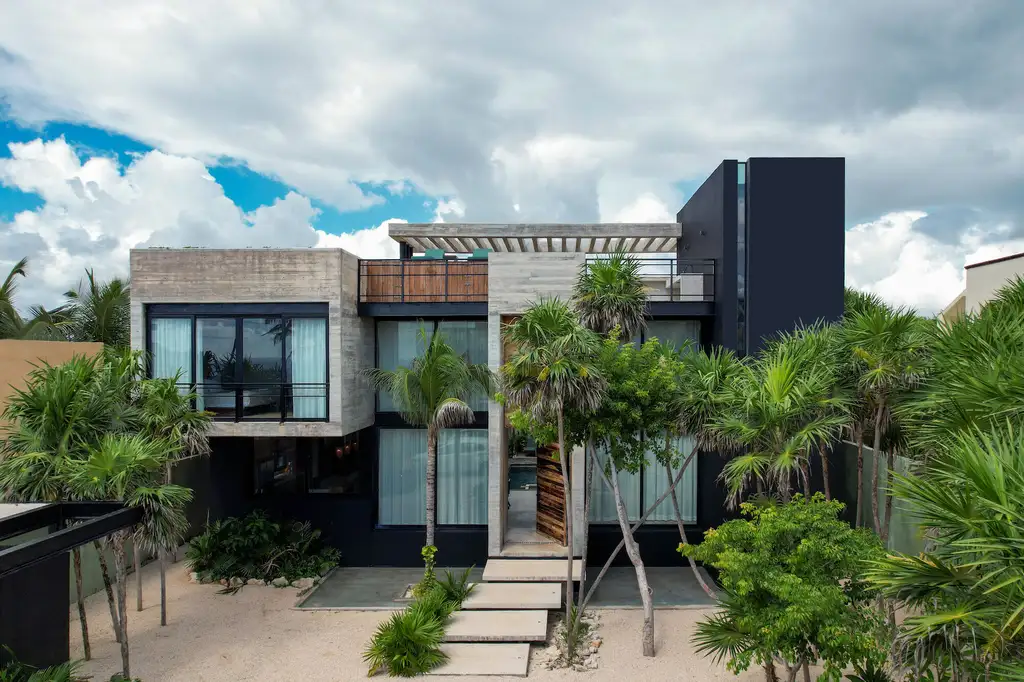
Each transition offers new perspectives, framing shifting views of vegetation, sky, and water.
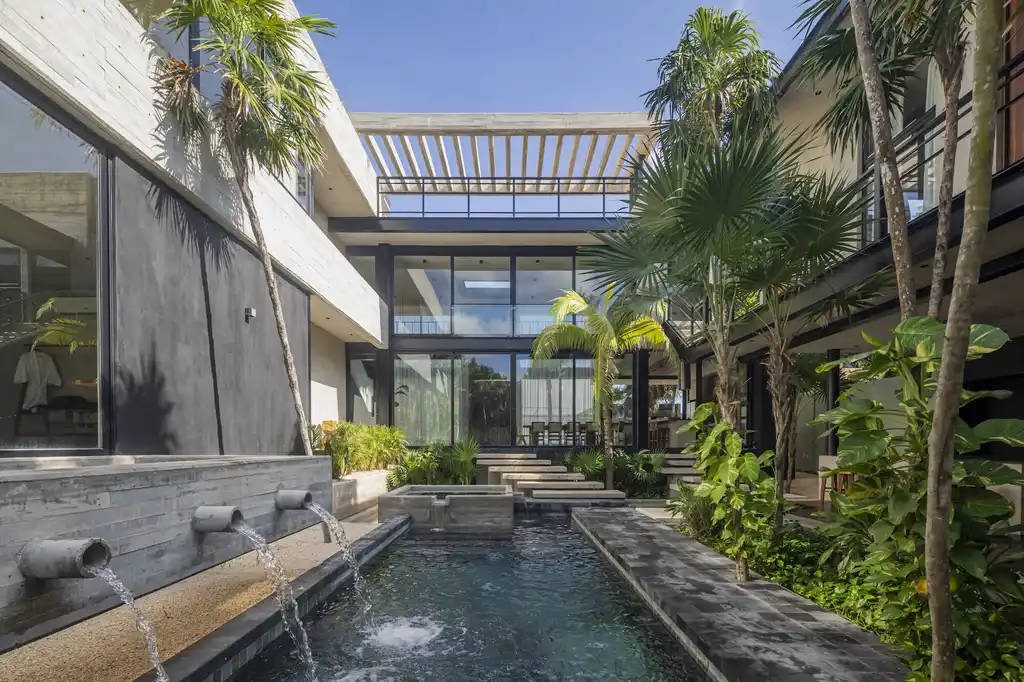
“The project is experienced through movement,” the design team note. “As you move through the house, space continuously transforms.”
This dynamic spatial sequence reinforces the idea of architecture as a lived journey rather than a static object.
SEE MORE: Elevated Serenity: Family House by Benyei Architectural Studio Redefines Modern Luxury in Hungary
Volumes in Dialogue with Jungle and Sea
The volumetric composition is defined by projecting and receding forms that extend toward two contrasting landscapes: the dense jungle and the distant sea. This dual orientation creates a subtle tension within the design, guiding how each volume is positioned and opened.
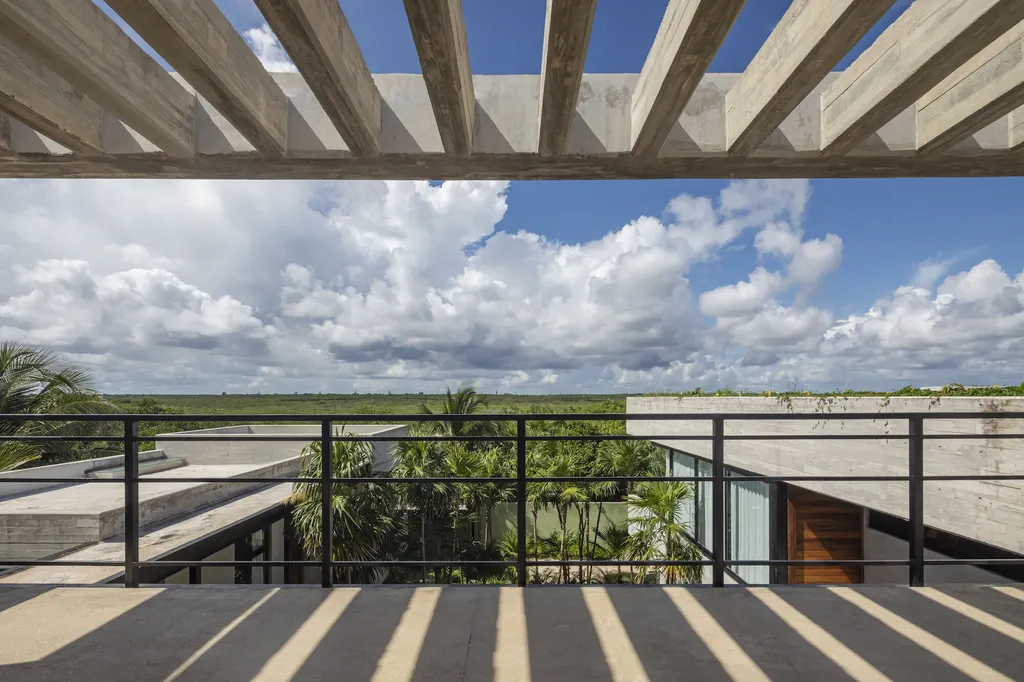
“The house negotiates between two horizons,” the architects share. “One intimate and enclosed, the other expansive and open.”
Through this interplay, the architecture establishes a dialogue between containment and openness.
SEE MORE: Kloof 151 by SAOTA, A Sculptural Family Home Overlooking Clifton’s Dramatic Coastline
The Courtyard as Climatic Core
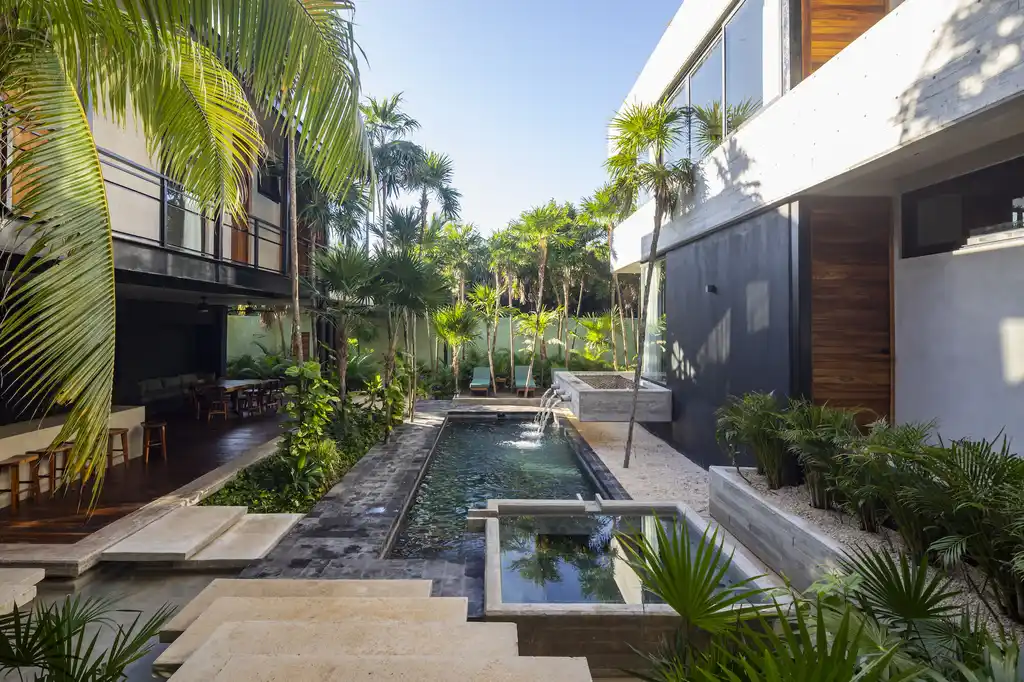
At the heart of Casa Vihara lies a long, central courtyard that acts as both a spatial anchor and a climatic regulator. This void protects interior façades from direct sunlight while allowing airflow and natural cooling to permeate the social areas.
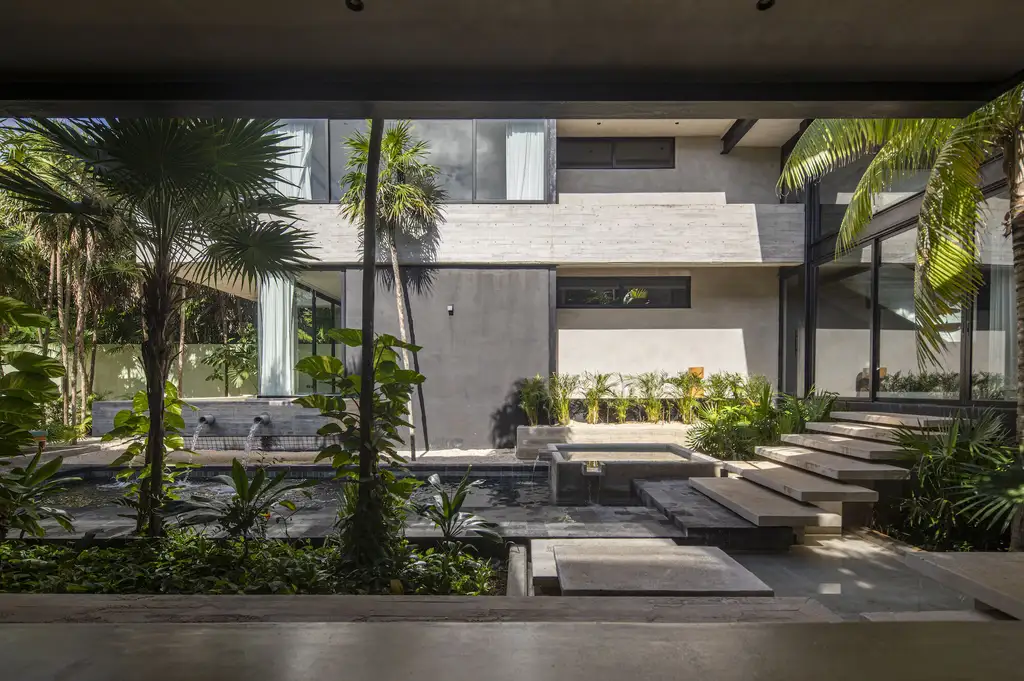
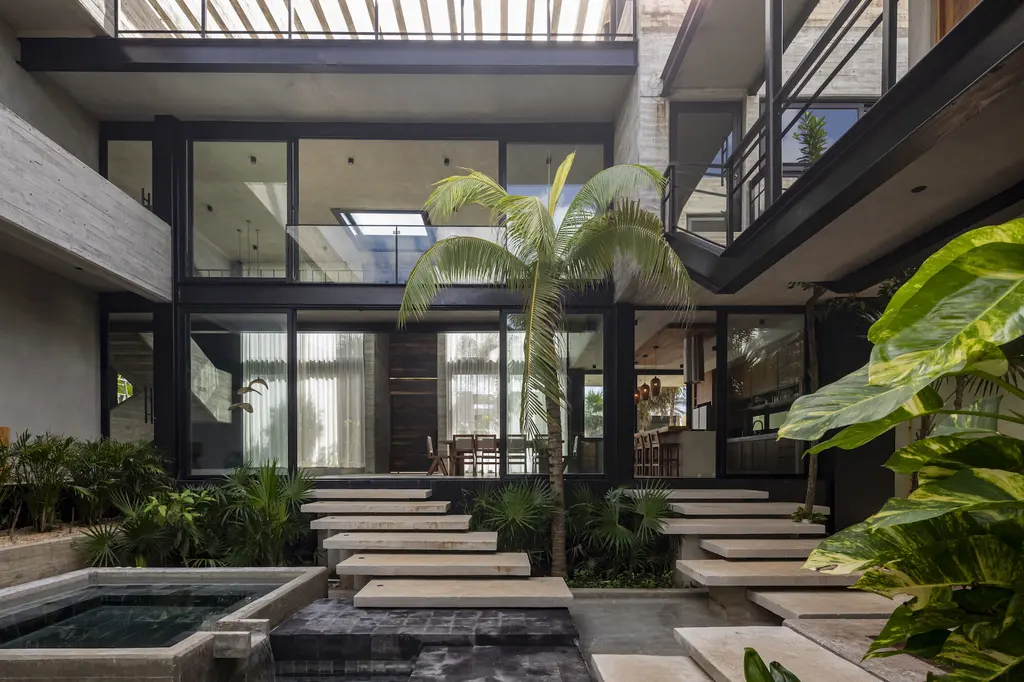
Around this courtyard, the living room, dining area, kitchen, and terraces are arranged, all immersed in a continuous presence of water and vegetation.
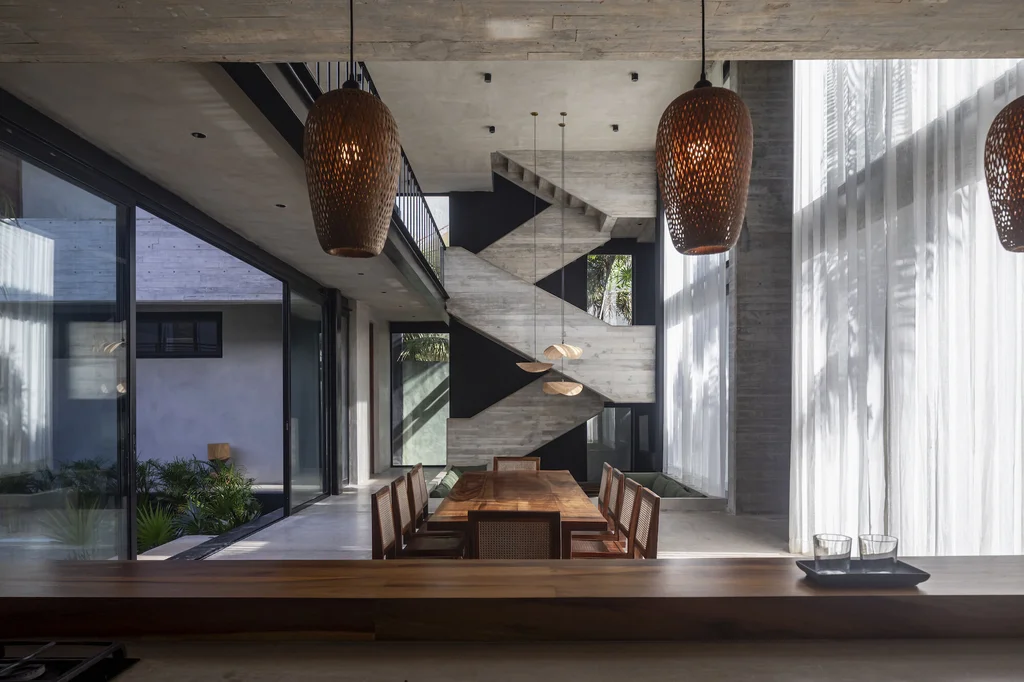
“Water and greenery are not decorative—they are essential,” the team explain. “They define the atmosphere and regulate the environment.”
From the moment of entry, these elements shape the sensory experience of the home.
SEE MORE: Long Island House by 1100 Architect, A Serene Oceanfront Retreat with Timeless Modern Design
Elevated Living and Expansive Views
On the upper level, bedrooms are carefully positioned to open both toward internal patios and outward to the surrounding landscape. This dual orientation allows residents to experience intimacy and vastness simultaneously.
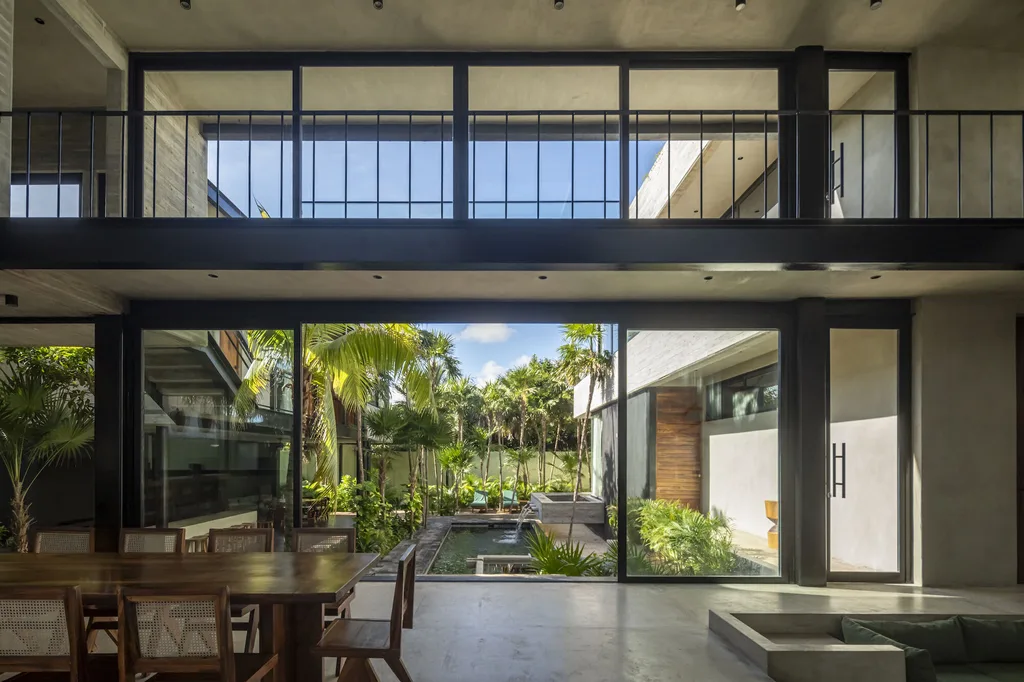
Views of nearby vegetation merge with the distant line of the sea, creating a layered perception of place.
“We wanted each room to feel connected to both the immediate and the distant landscape,” the architects note.
SEE MORE: Clifton View 7 by SAOTA, Luxury Design Redefining Atlantic Ocean Living
A Rooftop of Light and Reflection
The rooftop terrace offers a contemplative retreat, featuring a firepit and an additional pool that elevate the experience of the house. From this vantage point, the surrounding environment can be appreciated in its entirety.
A glass dome punctuates the roof, opening down into the double-height living and dining space below. Light filters through water above, casting shifting reflections across interior surfaces throughout the day.
“This interplay of light and water creates a constantly changing atmosphere,” the architects explain. “It brings movement and transparency into the heart of the home.”
SEE MORE: House Ven by Studio Vision, Modern Coastal Living on South Africa’s Garden Route
Materiality Rooted in Climate and Context
The material palette responds directly to the tropical environment. A “tropicalized” concrete defines the structure and architectural character, offering durability and low maintenance. Black steel accents introduce contrast, while locally sourced wood adds warmth and tactility.
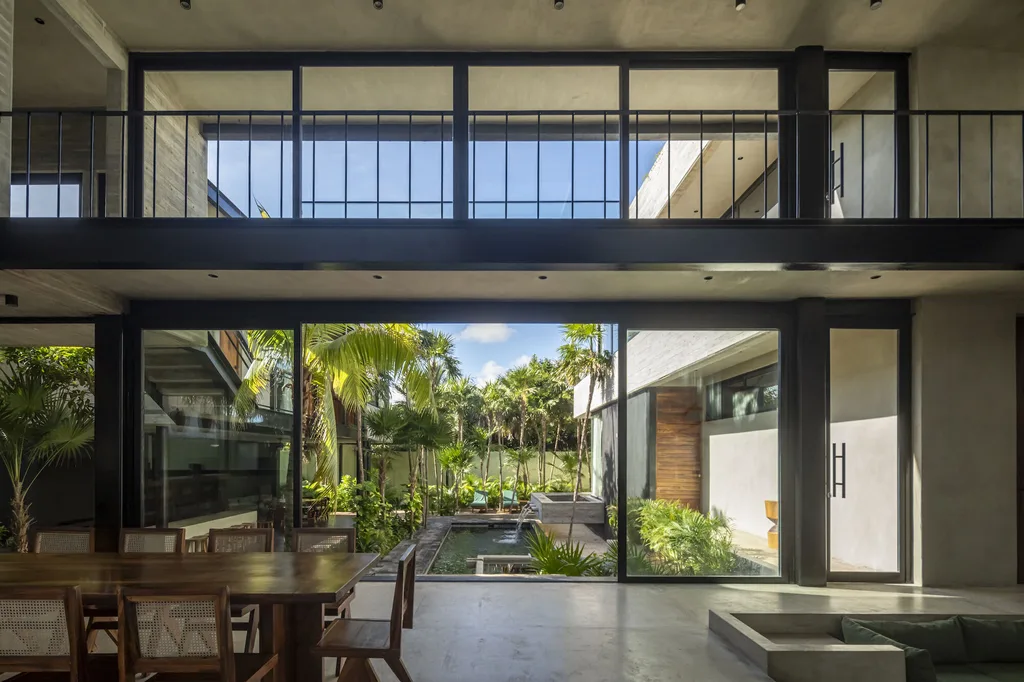
The neutrality of the concrete allows vegetation to take visual precedence, reinforcing the project’s connection to nature.
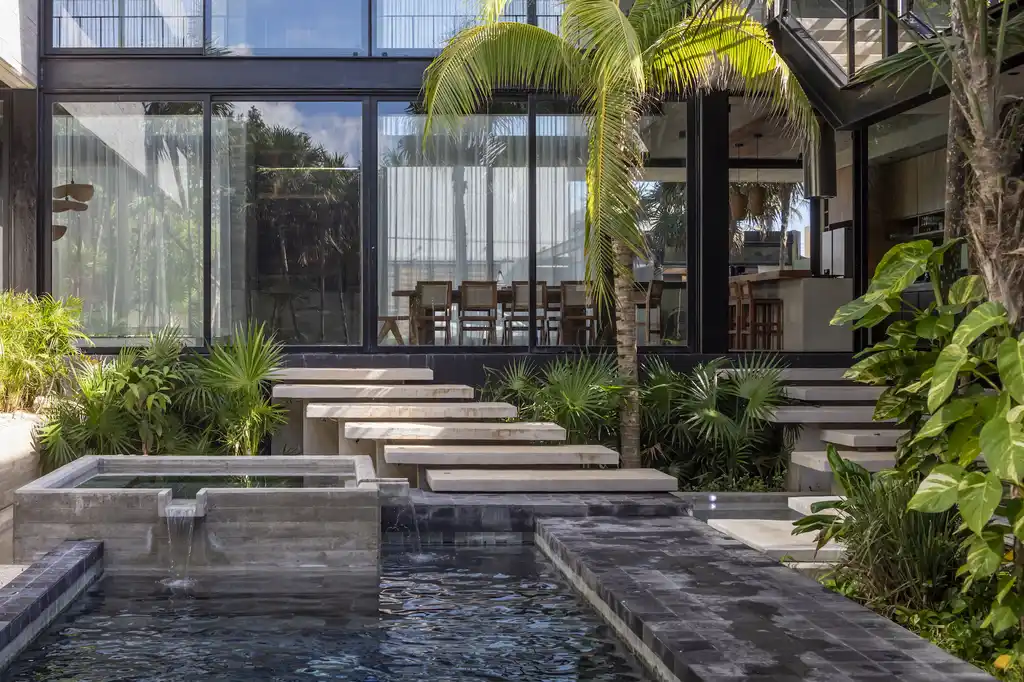
At the center of the composition, a sculptural concrete staircase weaves through the levels, its geometry inspired by pre-Hispanic motifs reinterpreted in a contemporary language.
“The staircase is both functional and symbolic,” the team share. “It connects the house physically while referencing cultural memory.”
Photo credit: | Source: Di Frenna Arquitectos
For more information about this project; please contact the Architecture firm :
– Add: Tercer Anillo Periferico #137, Plaza Aria Local 5, Residencial Esmeralda Nte., 28017 Colima, Col., Mexico
– Tel: +52 312 223 3197
– Email: matia.di.frenna@hotmail.com
More Projects in Mexico here:
- Harmonie House in Colima, Mexico by Edgar Fuentes Arquitectura: A Masterpiece of Modern Elegance
- Casa Miura by Taller Mexicano de Arquitectura, A Monumental Mexican Home Sculpted from Light, Concrete, and Nature
- Casa Licata by Esece, A Breezy Modern Sanctuary Rooted in Mérida’s Tropical Climate
- Vallarta House by Ezequiel Farca Studio Blends Coastal Elegance and Tropical Architecture in Puerto Vallarta
- KPR3 House by Ezequiel Farca Studio Blends Architecture and Nature on the Coast of Punta Mita